
Quick answer: Cleaning after building work means removing fine construction dust from every surface, top to bottom, then clearing paint, plaster and adhesive residue, cleaning glass and frames, and finishing floors. Wait until all trades have finished, ventilate well, vacuum with a filter suited to fine dust rather than sweeping, and work from ceilings down. For larger renovations, a professional after builders clean saves days of repeat dusting.
A new kitchen, a loft conversion or an extension should feel like a fresh start. Instead, the first thing most Manchester homeowners notice when the builders leave is the dust. It settles on every ledge, gets inside cupboards and reappears on surfaces you cleaned yesterday.
This guide explains how cleaning after building work differs from a normal clean, the order to do it in, the mistakes that make it harder, and when it is worth bringing in professionals.
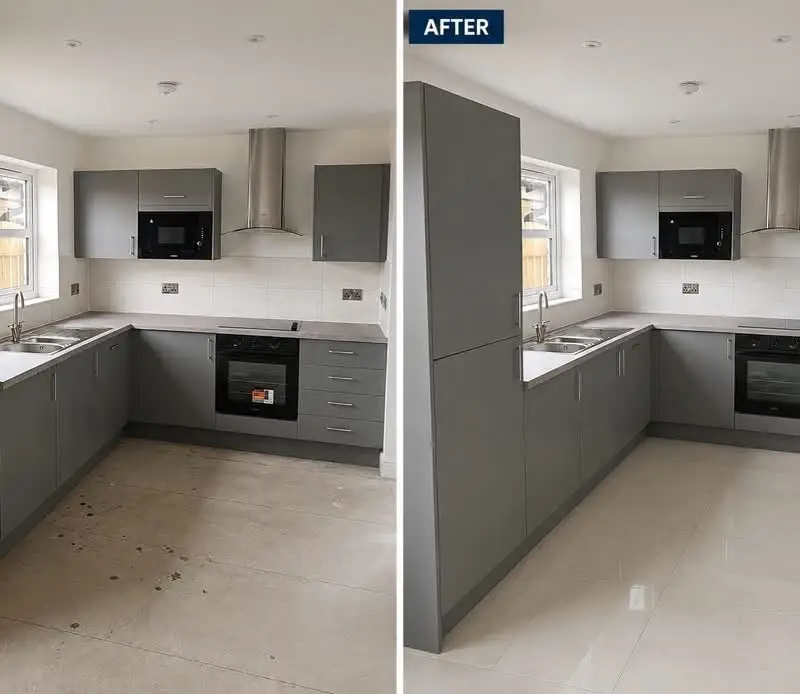
Why Construction Dust Is So Hard to Clean
Construction dust is much finer than household dust. Sanding plaster, cutting timber and drilling masonry create particles that hang in the air for hours and then settle everywhere, including rooms that were sealed off.
That fineness causes three problems:
- It spreads. Dust travels through gaps under doors, into air vents and into fabrics.
- It resettles. Sweeping or using a standard household vacuum can push fine dust back into the air, so it lands again a few hours later.
- It clogs. Fine plaster dust can quickly clog an ordinary vacuum’s filter and reduce its suction.
The Health and Safety Executive publishes guidance on dust and other risks on building sites in its construction section. For homeowners, the practical message is simple: control dust rather than spreading it around.
Before You Start Cleaning After Building Work
- Wait until every trade has finished. If the decorator or electrician still has a visit to make, a full clean now may need to be repeated. MSG Cleaners recommends booking once all building work is complete.
- Clear debris first. Offcuts, packaging, protective sheeting and rubble need removing before detailed cleaning can start.
- Ventilate. Open windows to let airborne dust clear.
- Protect yourself. Wear a suitable dust mask and gloves, especially when dealing with plaster and cement residue.
8 Steps to Cleaning After Building Work
1. Work from the top down
Start with ceilings, coving, light fittings and the tops of doors and wardrobes. Dust falls, so cleaning from the top down means you only clean each surface once.
2. Vacuum, don’t sweep
Use a vacuum with a filter suitable for fine dust. Professional teams use industrial vacuums for this reason. Sweeping lifts dust back into the air.
3. Clean walls, ledges and skirting boards
Dust sits on every horizontal surface: window ledges, door frames, picture rails and skirting boards. Vacuum first, then wipe with a barely damp microfibre cloth. Do not soak new paintwork.
4. Tackle vents and light fittings
Extractor fans, vent covers and light fittings trap dust, and if left they will keep releasing it into the room.
5. Remove paint, plaster and adhesive residue
Paint splashes on glass, plaster on tiles, silicone smears and sticker glue on new appliances all need the right technique to avoid scratching. Use plastic scrapers rather than metal on delicate surfaces, and test any product on a hidden area first.
6. Clean glass, frames and sills
New windows often arrive with protective film residue and dusty tracks. Clean the glass, frames, sills and tracks inside, and outside where accessible.
7. Clean kitchens and bathrooms properly
Dust gets inside new cupboards, drawers, extractor hoods and appliances. Wipe the insides as well as the outsides, then sanitise sinks, taps, toilets, showers and worktops before they are used.
8. Finish the floors
Floors come last. Vacuum thoroughly, then mop with a suitable cleaner for the floor type. Tile, wood, laminate, vinyl and concrete all need slightly different treatment, and it may take more than one pass to lift fine dust completely.
Common Mistakes to Avoid
- Cleaning while trades are still working. You will be doing it twice.
- Using the wrong vacuum. A standard household vacuum can lose suction quickly on plaster dust.
- Scrubbing new surfaces too hard. Fresh paint, new worktops and polished floors scratch easily.
- Forgetting soft furnishings. Curtains, sofas and rugs trap dust and may need professional cleaning. Carpet cleaning in Manchester can help if carpets were down during the work.
- Ignoring the insides. Cupboards, drawers and appliances fill with dust even when closed.
DIY or Professional Cleaning After Building Work?
For a small job, such as a new bathroom suite, many homeowners can manage the clean themselves over a day or two. For extensions, loft conversions, full refurbishments and new builds, a professional clean is usually faster and more effective.
MSG Cleaners’ after builders cleaning in Manchester covers:
- Construction dust removal from floors, walls, ledges, skirting boards, light fittings, vents and hard-to-reach corners
- Paint, plaster, silicone, sticker glue and adhesive residue removal from glass, tiles, worktops and woodwork
- Debris and site waste clearance, including offcuts, packaging and protective sheeting
- Floor restoration with industrial vacuuming, sweeping and deep mopping on tile, wood, laminate and concrete
- Interior windows, sills and frames, and outside where accessible
- Sanitising kitchens, bathrooms, switches, handles and high-touch points, followed by a final walkthrough
The team uses professional-grade products and equipment, so you do not need to supply anything. Flexible scheduling includes evenings and weekends, and you do not need to be present for the whole clean, though a final walkthrough is recommended.
Hazardous waste, difficult residues and work at height may need to be assessed separately, so mention them when you ask for a quote.
After Builders Clean or Sparkle Clean?
If your builder has already done a rough clean and cleared the debris, you may only need a final, detailed polish before you move in or hand over. That is what a sparkle clean is for. Read our guide on what a sparkle clean is to see which service fits your project.
Cleaning After Building Work for Builders, Developers and Landlords
MSG Cleaners works with builders, developers and landlords as well as homeowners, across homes, offices, retail units and new builds. Multiple units or sites can be cleaned at the same time, scheduled around your programme. For commercial projects, see our commercial cleaning services in Manchester.
How Long Does Cleaning After Building Work Take?
It depends on the size of the project and how much dust and residue the trades left behind. A single room refit may only need a few hours. A full renovation or extension can take a day or more, and larger commercial or new-build projects longer still. MSG Cleaners gives you a time estimate with your quote, based on the property and photos of the finished work.
A useful tip: if the builders are still finishing small snagging jobs, try to schedule the clean after the last visit. A single trade sanding a door or drilling for a light fitting can put fine dust back across a freshly cleaned room.
Health and Comfort After a Renovation
Fine construction dust can irritate eyes, skin and airways, and it is unpleasant to live with. Keep windows open while you clean, wear a suitable dust mask, and keep children and pets out of rooms until they are clean. Wash curtains and soft furnishings that were in the house during the work, or have them professionally cleaned.
Key Takeaways
- Wait until all trades have finished before cleaning after building work.
- Vacuum fine dust with suitable equipment; do not sweep it.
- Work from ceilings down and finish with the floors.
- Remove paint, plaster and adhesive residue carefully to avoid scratching new surfaces.
- For larger projects, a professional after builders clean saves days of repeat dusting.
Book Your After Builders Clean
MSG Cleaners covers Manchester, Greater Manchester, Stockport, Cheadle, Cheadle Hulme, Wythenshawe, Oldham, Cheshire and surrounding areas. The team is fully insured, and you get a fixed price before work starts.
Get Your Free Cleaning Quote: call 0333 054 0291, send photos on WhatsApp to +44 7599 887340, or request a quote online.
Frequently Asked Questions
How do you clean after building work?
Wait until all trades have finished, clear debris, ventilate, then work from the top down: ceilings and fittings, walls and ledges, vents, residue removal, glass, kitchens and bathrooms, and finally floors. Vacuum fine dust rather than sweeping it.
When should I book an after builders clean?
Book it once all building and decorating work is finished and the trades have left, so the clean does not need repeating.
How long does an after builders clean take?
A standard residential clean may take a few hours. Larger or commercial jobs can take a full day or more, depending on the size of the property and the amount of dust and residue.
Why does dust keep coming back after building work?
Construction dust is very fine and stays airborne, then resettles. It also hides in vents, fittings, cupboards and soft furnishings. Cleaning top to bottom with suitable vacuums stops it recirculating.
Do I need to be present during the clean?
No, as long as the team has access. A final walkthrough at the end is recommended.
Can I live in the house while cleaning after building work?
Yes, but it is easier to clean rooms one at a time and keep doors closed so dust does not spread. Keep children and pets away from areas still being cleaned.
What is the difference between an after builders clean and a sparkle clean?
An after builders clean removes heavy dust, debris and residue. A sparkle clean is the final detailed polish before handover or move-in. Larger projects often need both.
One Response